Skip Links

  • Skip to content
  • Skip to main navigation
  • Skip to search
  • Home
  • About us
  • Our work
    • Elections
    • Civil society
    • Rule of law
    • Democratic governance
    • Legislative support
    • Freedom of religion or belief
    • Freedom of peaceful assembly
    • Gender-based violence
    • Human rights defenders
    • Human rights and new technologies
    • Human rights and gender-responsive security sector
    • Human rights and anti-terrorism
    • Migration and freedom of movement
    • National human rights institutions
    • Torture
    • Trafficking in human beings
    • Hate crime
    • People with disabilities
    • Racism, xenophobia and discrimination
    • Roma and Sinti
    • Gender equality
    • Special meetings
      • Human Dimension Implementation Meetings
      • Supplementary Human Dimension Meetings
      • Human Dimension Seminars
  • News
  • Events
  • Resources
back to OSCE
OSCE Office for Democratic Institutions and Human Rights
  • English
  • Home
  • About us
  • Our work
  • News
  • Events
  • Resources
ODIHR Panel of Experts on Freedom of Religion or Belief

Multimedia Gallery

Getting (the right to) freedom of religion or belief right
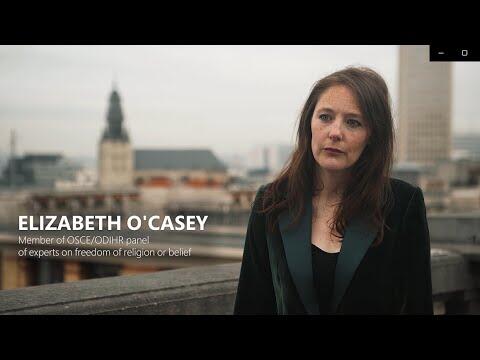
Blasphemy laws are bad for security
In this video, Elizabeth O’Casey, member of the OSCE/ODIHR Panel of Experts on Freedom of Religion or Belief, explains why blasphemy laws are bad for security…
Date 24 March 2022
In this video, Elizabeth O’Casey, member of the OSCE/ODIHR Panel of Experts on Freedom of Religion or Belief, explains why blasphemy laws are bad for security. Blasphemy laws protect ideas rather than people, but the ideas that they protect are not universally held. As a result, these laws violate the rights of free expression and freedom of religion or belief. Research shows that countries that prosecute "blasphemy" and "insult to religion" tend to suffer disproportionately from inter-communal intolerance. It is time for such laws to be repealed.English, French and Russian subtitles are available for this video.
© OSCE | Video details

Freedom of Religion or Belief is for EVERYONE
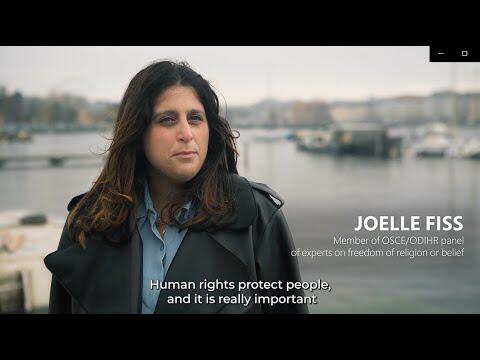
In this video, Joelle Fiss, member of the OSCE/ODIHR Panel of Experts on Freedom of Religion or Belief, explains why freedom of religion or belief protects…
Date 31 March 2022
In this video, Joelle Fiss, member of the OSCE/ODIHR Panel of Experts on Freedom of Religion or Belief, explains why freedom of religion or belief protects people, not religions. No-one should be left out, regardless of whether they believe or not, or belong to a religious community or not. All individuals should be treated equally and their right to choose, change or belong to a religion or belief should be protected and respected. English, French and Russian subtitles are available for this video.
© OSCE | Video details

Freedom of religion or belief fosters peaceful coexistence
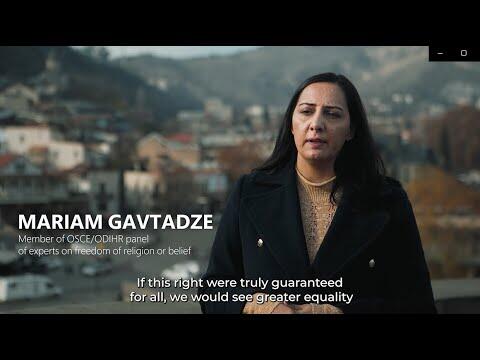
In this video, Mariam Gavtadze, member of the OSCE/ODIHR Panel of Experts on Freedom of Religion or Belief, explains how respect for the freedom of religion or…
Date 24 March 2022
In this video, Mariam Gavtadze, member of the OSCE/ODIHR Panel of Experts on Freedom of Religion or Belief, explains how respect for the freedom of religion or belief fosters peaceful coexistence. Unfortunately, freedom of religion or belief is not always respected and promoted and religious minorities are often amongst the first to suffer the consequences. States must be even-handed in their treatment or they will erode their own security. English, French and Russian subtitles are available for this video.
© OSCE | Video details

The COVID-19 pandemic and freedom of religion or belief
For many religious or belief communities, the Covid-19 pandemic had a significant impact - from closed places of worship and limited attendance at events such…
Date 1 April 2022
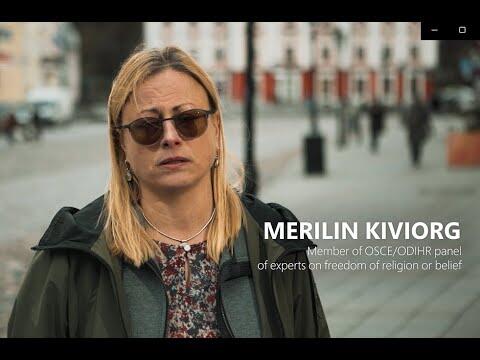
For many religious or belief communities, the Covid-19 pandemic had a significant impact - from closed places of worship and limited attendance at events such as weddings or funerals, to greater online activities and community mobilisation to offer aid to those in distress. While states can legally limit people's free exercise of their religion or belief to protect health and lives, such restrictions should be constantly reassessed as they can quickly outlive their purpose. Merilin Kiviorg, member of the OSCE/ODIHR Panel of Experts on Freedom of Religion or Belief, explains. English, French and Russian subtitles are available for this video.
© OSCE | Video details

Women need greater freedom of religion or belief
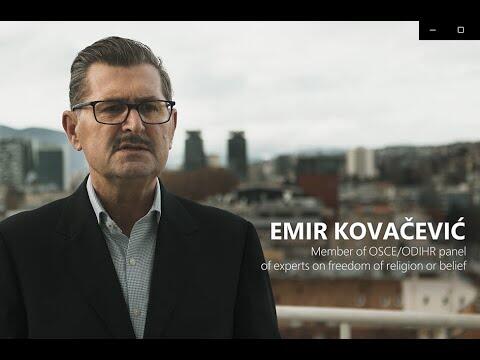
In this video, Emir Kovacevic, member of the OSCE/ODIHR Panel of Experts on Freedom of Religion or Belief, explains that the right to freedom of religion or…
Date 1 April 2022
In this video, Emir Kovacevic, member of the OSCE/ODIHR Panel of Experts on Freedom of Religion or Belief, explains that the right to freedom of religion or belief applies to men and women equally. But in practice, many women in the OSCE region face major difficulties in accessing this right. Many harmful practices against women are justified by reference to religious traditions, whether these traditions are actually rooted in a religion or not.English, French and Russian subtitles are available for this video.
© OSCE | Video details

Secularism – is it good or bad for freedom of religion or belief?
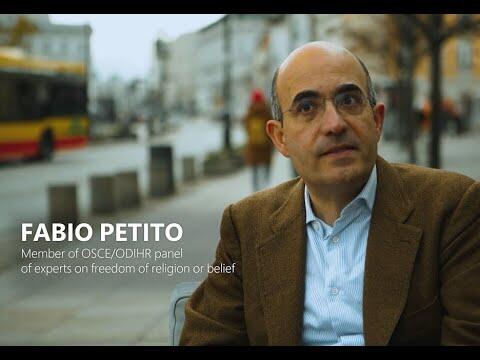
Secularism is the political doctrine defined by the idea of separation between religion and the state. In increasingly pluralistic societies, a number of…
Date 1 April 2022
Secularism is the political doctrine defined by the idea of separation between religion and the state. In increasingly pluralistic societies, a number of models of secularism have emerged. Each model can lead to a robust legal protection of the right to freedom of religion or belief, but only if the state strives for neutrality and works to combat discrimination based on religion or belief. Fabio Petito, member of the OSCE/ODIHR Panel of Experts on Freedom of Religion or Belief, explains. English, French and Russian subtitles are available for this video.
© OSCE | Video details

Freedom of religion or belief builds security
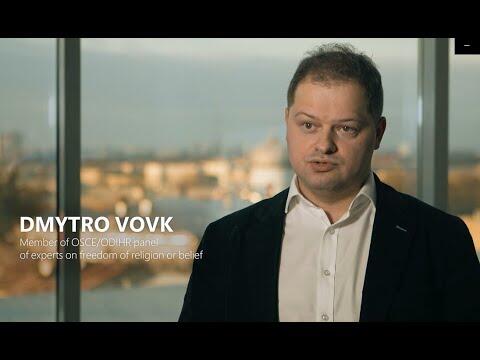
International human rights treaties purposefully exclude national security as a legitimate aim for restricting freedom of religion or belief. While security is…
Date 5 April 2022
International human rights treaties purposefully exclude national security as a legitimate aim for restricting freedom of religion or belief. While security is often associated with politics or military protection, the OSCE’s approach adds the concept of a human dimension of which freedom of religion or belief is part. In this video, Dmytro Vovk,  member of the OSCE/ODIHR Panel of Experts on Freedom of Religion or Belief, explains why freedom of religion or belief should not be abandoned in light of security challenges, but should be reinforced.English, French and Russian subtitles are available for this video.
© OSCE | Video details

Freedom of Religion or Belief: To practice with others or not?

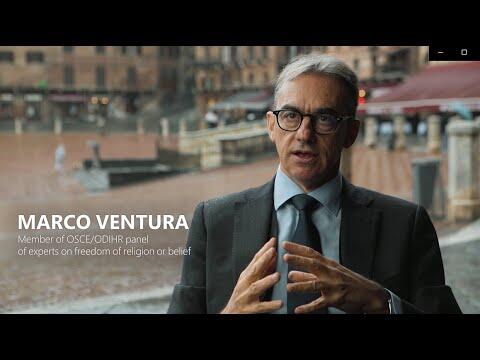
In this video, Marco Ventura, member of the OSCE/ODIHR Panel of Experts on Freedom of Religion or Belief, looks into the individual and collective aspects of…
Date 31 March 2022
In this video, Marco Ventura, member of the OSCE/ODIHR Panel of Experts on Freedom of Religion or Belief, looks into the individual and collective aspects of the right to freedom of religion or belief. This is a human right that belongs to each individual, but insofar as individuals come together to manifest their religion or belief, it is a collective right as well. This is important as States have a duty to facilitate the practice of this right. English, French and Russian subtitles are available for this video.
© OSCE | Video details

Freedom of thought, conscience, religion or belief is an integral part of the human rights framework. But why does this right matter? Do you know how it works in practice? Why is it important for peace and security? Is it for individuals or groups? What happened to this right during the Covid-19 pandemic as places of worship shut? Does it threaten or conciliate secularists? Does it oppress or emancipate women? Does it curb free speech or expand it?

Whether you are religious or not, this is your right, and it enables you to live and act in accordance with your own choices. This video series with members of the ODIHR Panel of Experts on Freedom of Religion or Belief (2019 - 2022) seeks to debunk some of the common misunderstandings surrounding freedom of religion or belief to ensure that each individual, alone or in community with others, can enjoy this right, and that policymakers can better protect and respect it.

Date Date:
14 November 2025
Source Source:
OSCE Office for Democratic Institutions and Human Rights

Contact
Logo ODIHR

OSCE Office for Democratic Institutions and Human Rights

Ul. Miodowa 10
00-251 Warsaw
Poland

Phone: +48 22 520 06 00
Email: office@odihr.pl

Social media:

LinkedIn
X/Twitter
Facebook
Instagram
BlueSky
YouTube

Footer

  • Contacts
  • Employment
  • Subscribe for updates
  • Social media
    • Go to X Go to X X
    • Go to LinkedIn Go to LinkedIn LinkedIn
    • Go to Facebook Go to Facebook Facebook
    • Go to Instagram Go to Instagram Instagram
  • Press
  • Partnerships

Footer2

  • Terms of Use
  • Procurement
  • About this website
  • Report wrongdoing
  • Feedback